Before World War I, we are told, Europeans could travel throughout the Continent without passports. The same was true of North America before 9/11. All an Americans needed to enter Canada was a rabies vaccination certificate for their dog, if they had one. All they needed to get back was to state where they were born. “POTS-dam, New York,” my mother would sing out. “Germany!” my grandfather would growl. Was he a U.S. citizen? the border guards would ask. “Since before you were born, Sonny!” he would retort. Then as now, border guards do not like being trifled with, and invariably they would pull him over, but all they could do was waste his time.
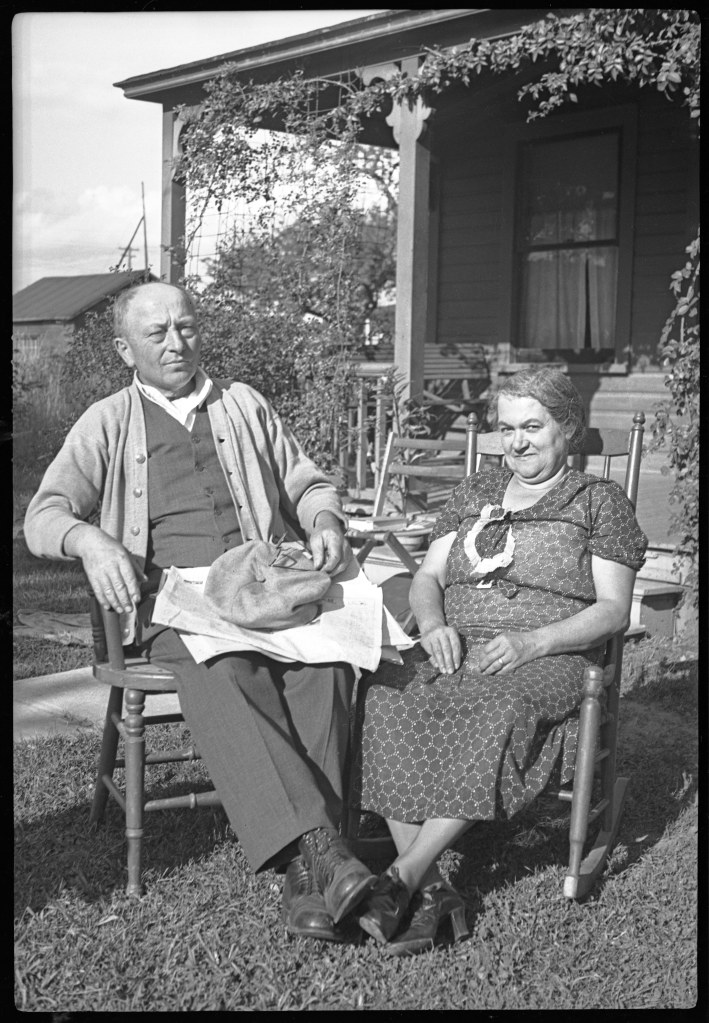
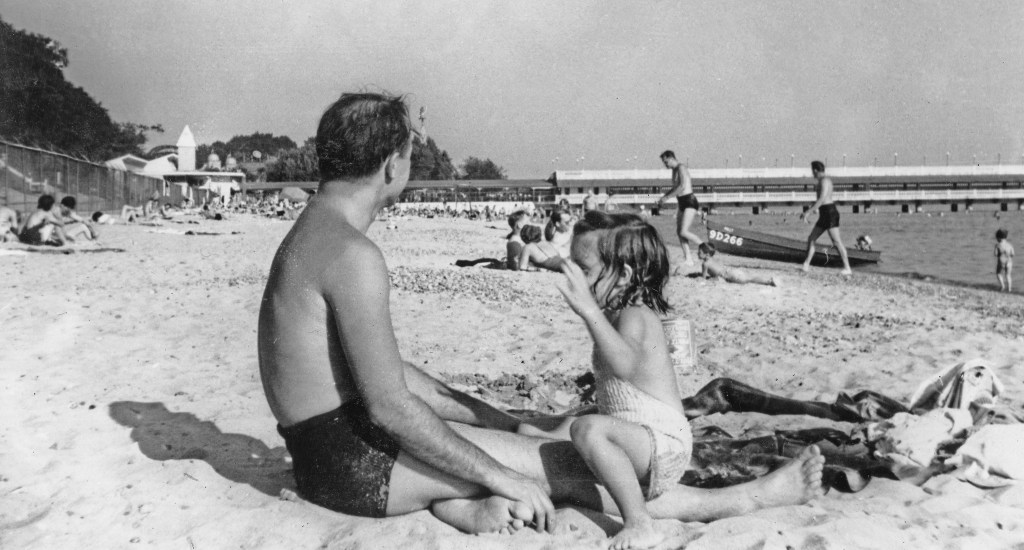
My father grew up in Buffalo, a border town in a border state. After his mother suffered a nervous breakdown subsequent to bearing her eighth child, his father, the above-mentioned smart aleck, bought her a cottage, sight-unseen, in Crystal Beach, Ontario, a vacation destination on Lake Erie for working class Buffalo. Crystal Beach boasted one of the most perfect swimming beaches on any of the Great Lakes, and next to it stood an early 20th century midway with a multiplicity of rides, including a Ferris wheel, roller coaster, boats that floated through enchanted tunnels, and a miniature train.
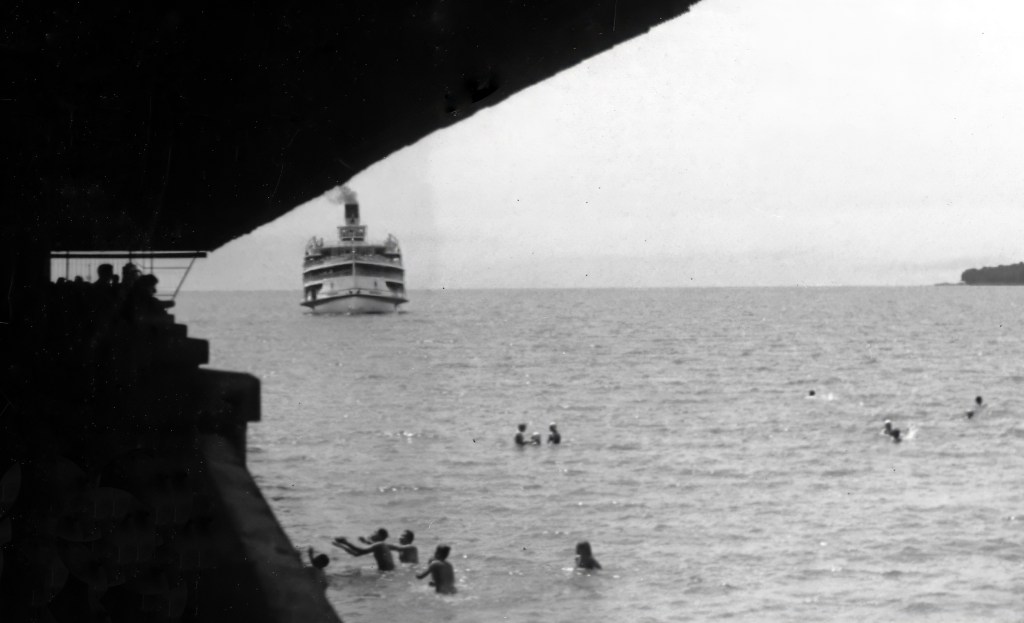
Until the late 1950s, one had only to hop onto the “Beach Boat” to get from Buffalo to Crystal Beach by ferry. It docked at a long pier that stretched out along the midway side of the beach where it remained for scores of years after the ferry had ceased operations.
Alternatively, one could reach Crystal Beach by train via Ridgeway, a nearby town that also catered to tourists from the States. My grandfather, I’m told, would take the train to Ridgeway and, on his walk to the cottage, buy gladiolas for his wife, who spent her summers there while he stayed in the city to work.
Ridgeway had its own magic. In the 1950s, Canada was still part of the Commonwealth. A faux timber-frame Tudoresque building housed an extensive store offering goods from the Commonwealth: English china, Scottish woolens, koala bear stuffies (although we didn’t use that term back then), and children’s books that featured koala bears, kangaroos, and other exotic creatures from Australia. Other stores featured English toffees, and a drugstore, named Brodies, offered ice cream sodas in flavors we couldn’t get at home.

Home was Michigan, where my father landed a job soon after the end of World War II, and every summer we trekked to Buffalo/Crystal Beach, first by bus and later by car, across the part of Canada that stretches down between Lake Huron and Lake Erie. A succession of bridges connects the two countries, the Ambassador Bridge (Detroit/Windsor), the Bluewater Bridge (Port Huron/ Sarnia), the Peace Bridge (Buffalo/Fort Erie), the Rainbow Bridge (Niagara Falls, both sides), to name a few.
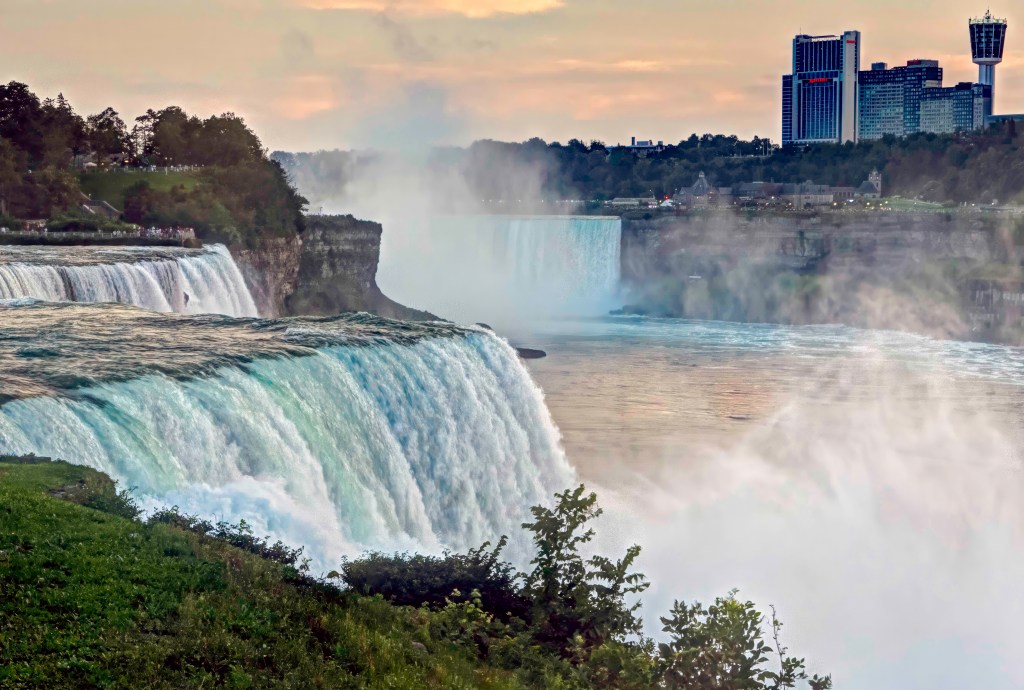
World famous Niagara Falls spans the Niagara River between the U.S. and Canada; the most beautiful views are on the Canadian side. Every summer included an evening visit to the Falls, where we watched colored lights projected onto the tumbling water. A barge, stuck on the rocks above the falls since 1918, inspired its own wonder. Out of control and heading for disaster, it moored on rocks near the Canadian shore, some 766 meters short of the water raging over the 50 meter drop. Fearing it would soon dislodge, crews using ropes hastened to rescue the two men aboard, but for one hundred years the barge never left its resting place; in 2019 it finally shifted and began to break apart.
As an adult I’ve ranged further than Crystal Beach in eastern Canada: the 1967 Montreal Expo, academic meetings in Montreal and Toronto, camping on Lake Superior and in Lake Huron on Manitoulin Island, visits to the Ottawa Valley and the Thousand Islands in the Saint Lawrence Seaway, a week on Campobello Island, off the coast of Maine, in 2017, the year Canada celebrated 150 years of independence from Great Britain.
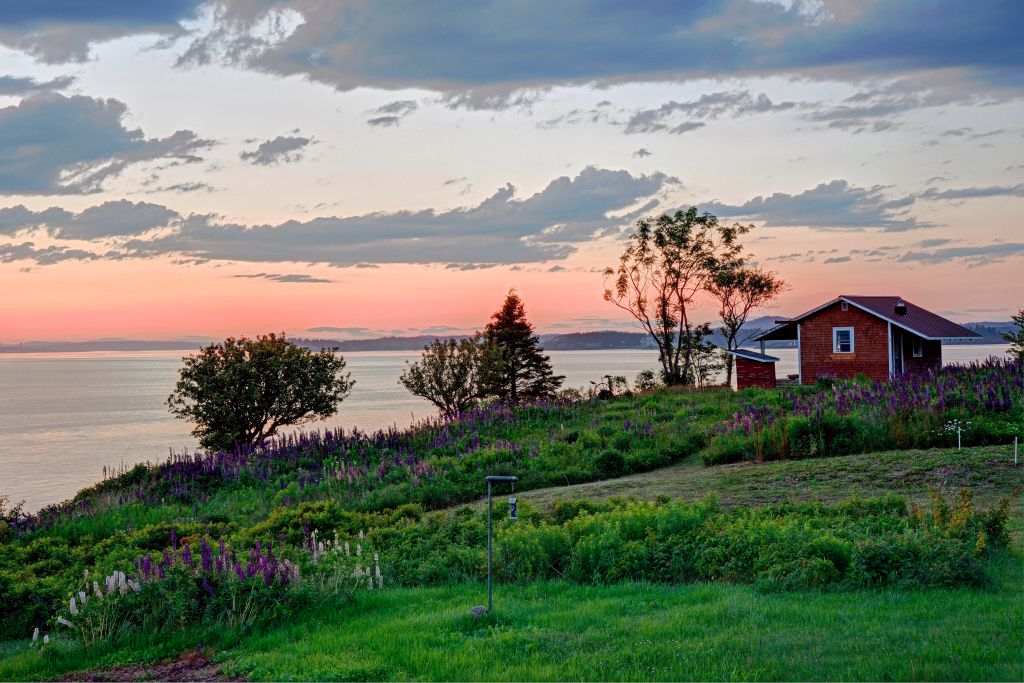
Of the ten places their readers most want to visit, the New York Times finds that a rail trip through the Canadian Rockies is number one. My parents took that trip. My husband and I would love to follow (but it has gotten very expensive).
As a child I travelled to Canada to visit my cousins, and Canada itself seemed like a cousin, a “foreign” country that did not seem foreign at all, just a little bit different: different money, with almost the same value, an obsession with maple leaves, French everywhere, and, back in the day, a touch of England. I never dreamed my own country would elect a boorish chief executive who would troll, demean and try to damage Canada. At a very visceral level, Canada is family.
In 2025, the Canadians dedicated the brand new Gordie Howe International Bridge, which crosses the Detroit River between Windsor and Detroit. The span between its support towers is the longest for a cable-stayed bridge in North America and among the longest in the world, a show of faith in the future of Canadian/U.S. mutuality and support. The bridge is named for Gordie Howe, a Canadian hockey star who played for the Detroit Red Wings, symbol of the symbiosis between the United States and Canada. Our churlish chief executive, determined to destroy all that is righteous, good, and beautiful, has threatened to prevent the bridge from opening, but Michigan’s governor insists otherwise. Chief executives come and go. The bond between Canada and the United States may be assured by treaties and ruptured by indecent political actors, but it lives on in the hearts of its peoples, and it will endure.
 Site Title
Leave a comment